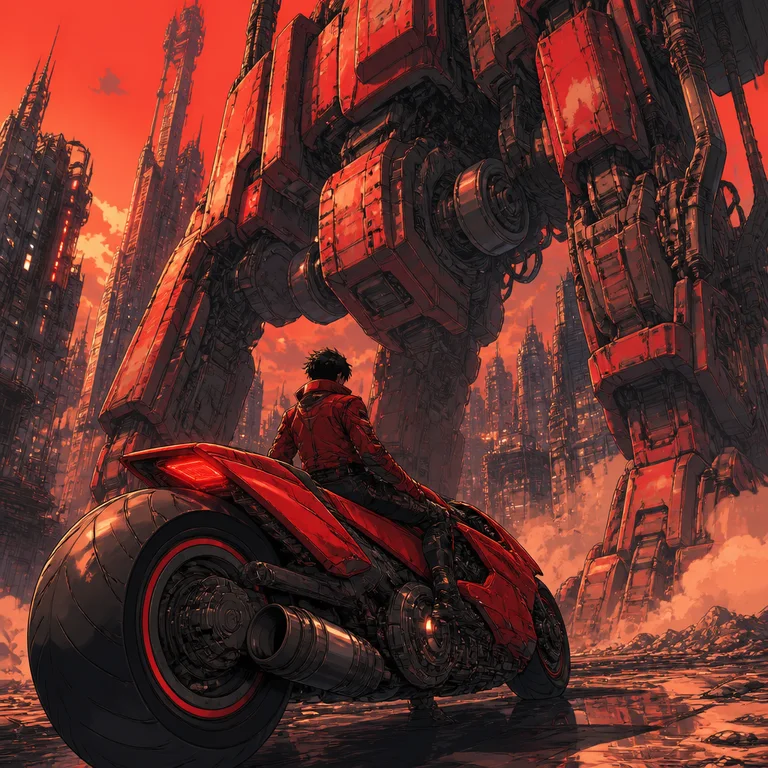
Description
This aesthetic established a specific late-1980s Japanese cyberpunk-anime look that almost every subsequent grounded-future anime borrows from. The visual rules: ultra-detailed near-future urban architecture (a stratified, oversized, lived-in megacity); hard mechanical detail with weight and surface wear; long flat shadows from artificial light at night; specific color signatures — bike-tail-red on black asphalt, neon orange against deep teal, fluorescent green for instrument panels; and a willingness to spend frame budget on city-scale wide shots rather than character close-ups. In motion the style favors anatomically grounded mechanical movement, debris and dust as visual texture, and a hand-drawn perspective grid that holds together at extreme angles. Use it for cyberpunk cityscapes, mechanical detail, action stills, dystopian portraits, futuristic-megacity references, motorcycle and vehicle imagery, and any image that should feel weighty, urban, and post-industrial. Limitations: not for soft, not for cute, not for daylight. Avoid generic "cyberpunk" — specify a late-1980s hand-drawn cel-anime megacity, a red sport motorcycle sliding across wet asphalt, and dense mechanical surface detail to anchor it.
Working prompts
Three prompts we've tested against current FairStack models. Copy and run.
-
retro cyberpunk anime megacity cityscape at night, towering oversized buildings, neon orange and deep teal signage, red taillight streaks from motorcycles, detailed mechanical street level, late-1980s cel anime style
-
red sport bike close-up, anatomically grounded mechanical detail, hard surface wear, low angle from wet asphalt, anime line art
-
dystopian Tokyo highway underpass, concrete brutalism, single figure walking, fluorescent green instrument-panel light from passing car, cyberpunk anime cel
Recommended models
Models from FairStack's catalog that handle this style best. Sorted by price.
Related styles
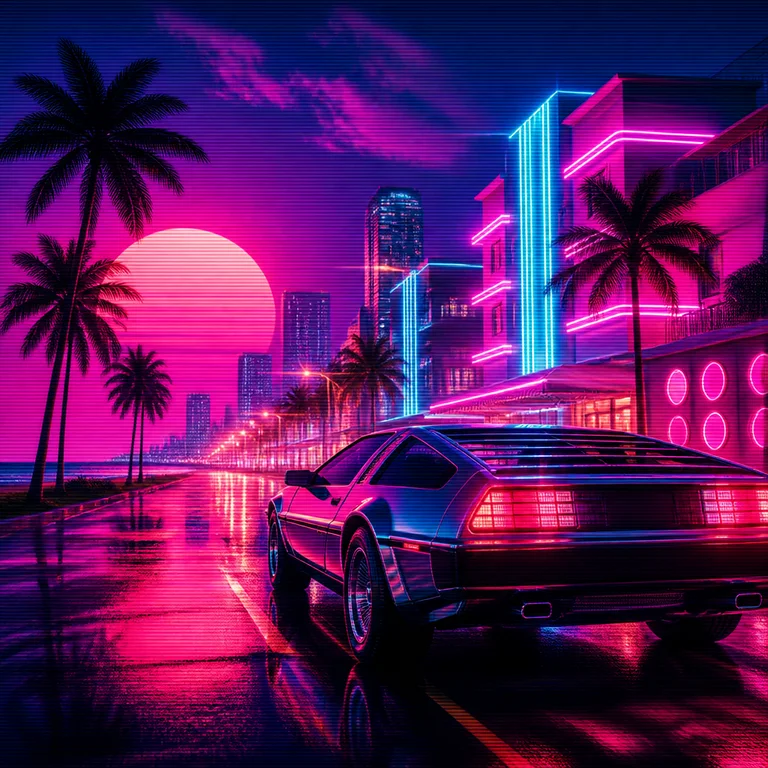
1980s Neon / Synthwave
Synthwave (the music) and the 80s-neon visual aesthetic (the look) are two halves of the same retro-future revival. The visual rules are…
Open style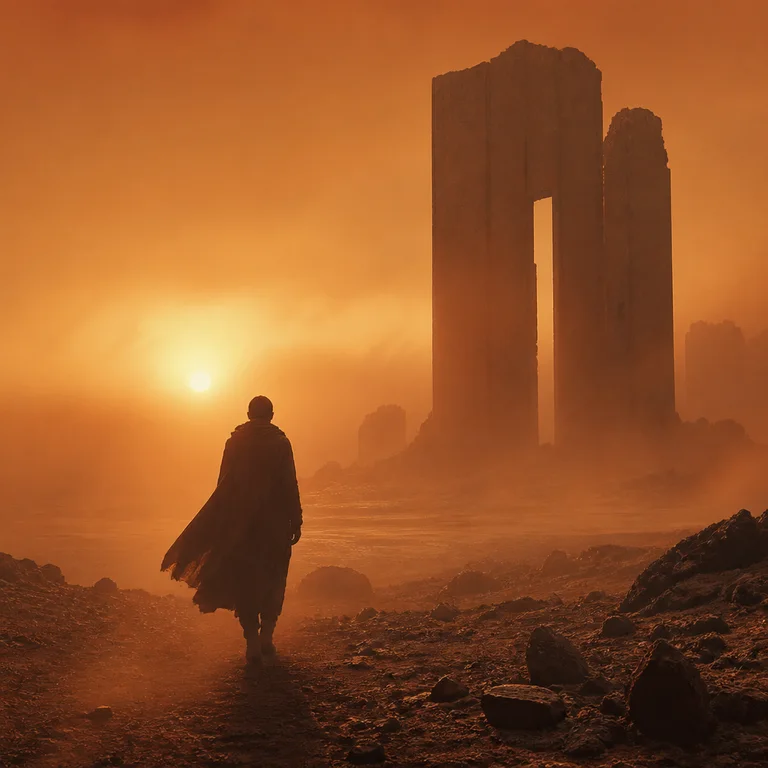
Monolithic Sci-Fi
A run of contemporary science fiction films has established a coherent visual language for modern sci-fi that everyone else now reference…
Open style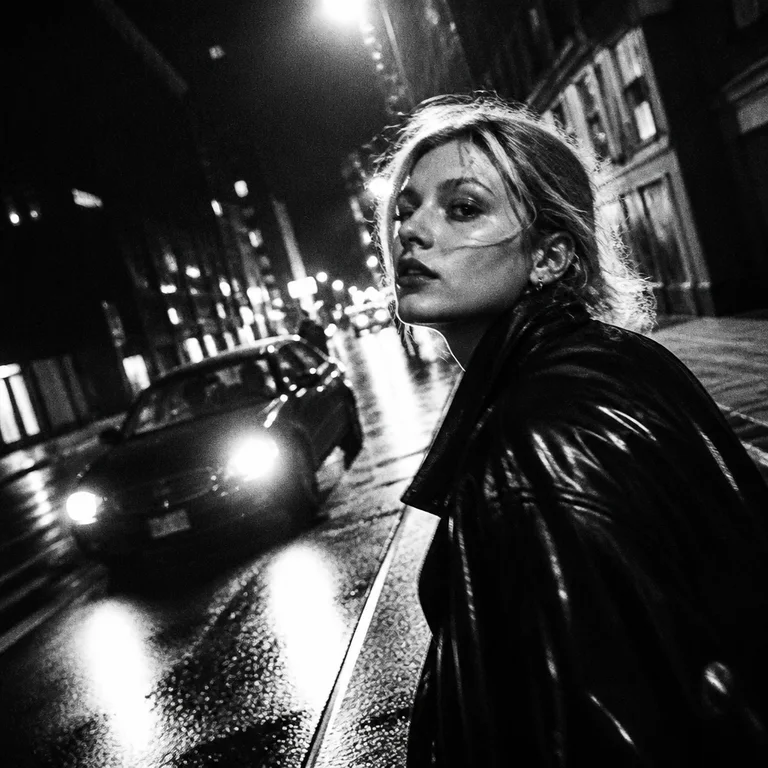
Gritty High-Contrast B&W
Postwar Tokyo produced some of the most influential street photography to come out of Japan, built on a visual signature that is extreme:…
Open style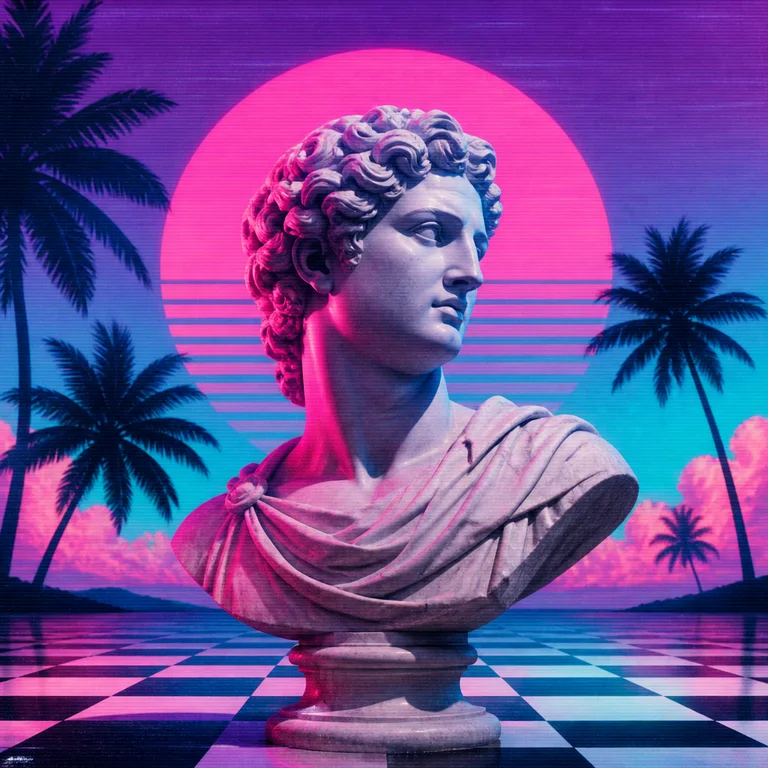
Vaporwave
Vaporwave is the internet-native aesthetic that emerged around 2010–2012 from chopped-and-screwed remixes of 1980s muzak, smooth jazz, an…
Open style